
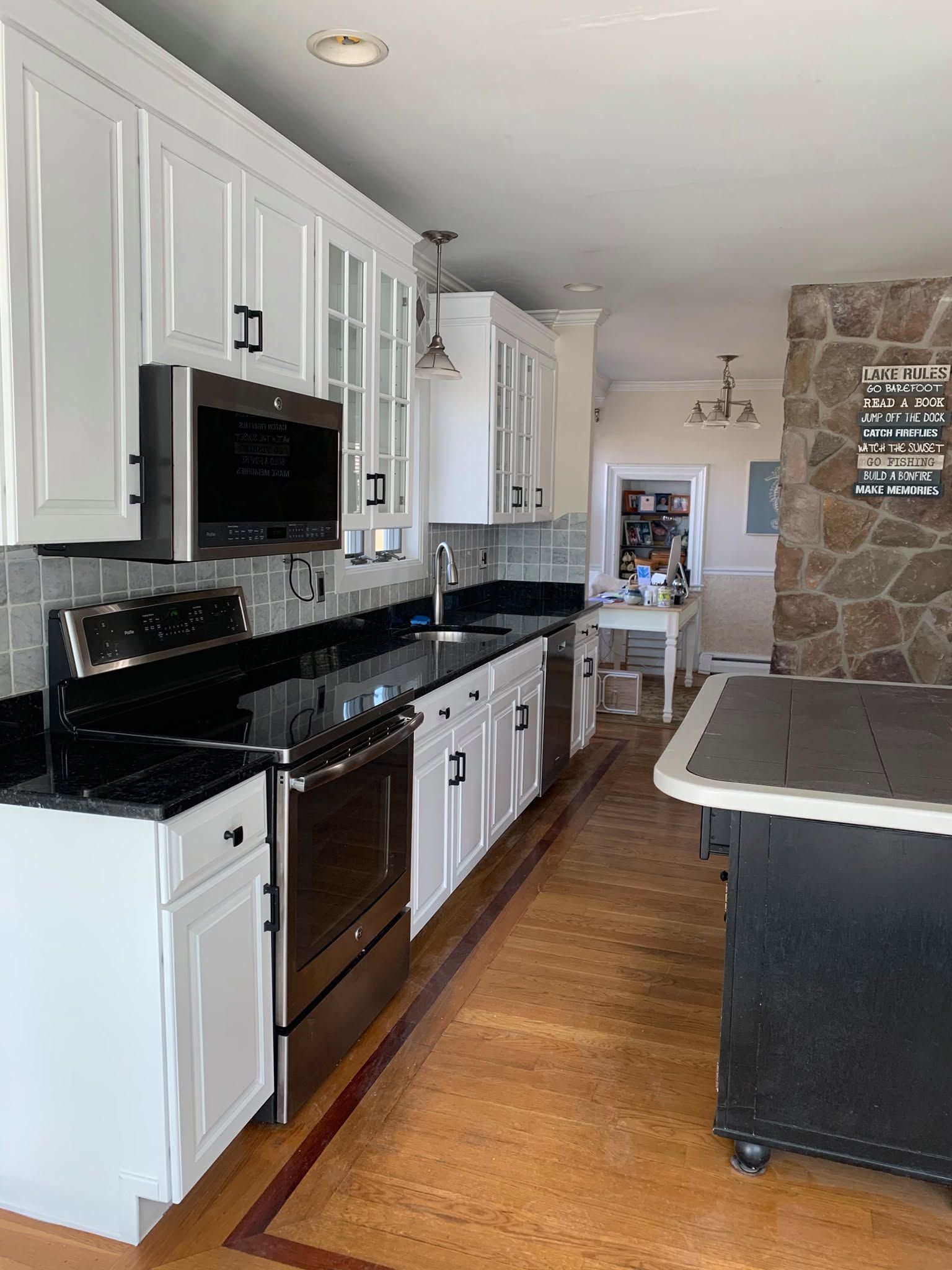
Existing Cabinetry Given a Finished, Updated Surface
Cabinet Painting and Refinishing in Fall River for kitchens and storage areas where worn or dated finishes make structurally sound cabinets look ready for replacement
What changes after cabinet painting and refinishing is immediate and specific: door fronts that showed worn edges, discolored surfaces, or uneven old finishes come out of the process looking clean, consistent, and intentional. Infinity Coatings & Construction handles cabinet painting and refinishing in Fall River for customers who want that result without the cost and disruption of tearing out and replacing cabinetry that is otherwise structurally intact. The work is well-suited to kitchens where the layout and box construction are functional but the visible surfaces have aged past what cleaning or touch-ups can address.
Preparation is the step that separates a refinishing result that holds up from one that chips and peels within a year. Cabinet surfaces accumulate grease, cleaning residue, and factory finishes that prevent new coatings from adhering properly without thorough cleaning and scuff-sanding first. Door fronts, drawer faces, and edge profiles each present slightly different surface geometry that affects how coating is applied and where coverage needs careful attention. Hinges, pulls, and hardware are removed before coating begins so that edges and recessed panel areas receive complete, even coverage rather than the thin or missed spots that come from painting around hardware in place.
Request a cabinet painting and refinishing estimate to review your current cabinetry condition and discuss finish options that fit the project.
What Cabinet Refinishing Actually Accomplishes
The process involves cleaning all surfaces to remove contaminants, scuff-sanding to create mechanical adhesion for the new coating, applying primer where the substrate requires it, and finishing with topcoats suited to the demands of a kitchen environment—where surfaces face moisture, heat, and repeated handling. The number of coats and the specific products used respond to what the cabinet material and existing finish require, not a fixed sequence applied uniformly.
Customers notice that cabinet doors and drawer fronts have a consistent color and sheen across all surfaces, that edges where the old finish had chipped or worn through are now coated evenly, and that the kitchen reads as noticeably updated without any change to the layout, hardware mounting, or cabinet structure. This is particularly visible on upper cabinets where worn or yellowed finishes draw attention at eye level. The work also fits naturally alongside kitchen painting and remodeling projects where walls, trim, and cabinetry are being addressed together.
Not every cabinet is a good candidate for refinishing—boxes with water damage that has swollen or delaminated the substrate, or door fronts with deep structural damage, may not hold a new coating reliably regardless of preparation quality. Part of the estimate process involves evaluating cabinet condition to identify which surfaces will respond well and whether any specific areas need repair before coating begins. That assessment protects against investing in refinishing work on surfaces that won't hold the result.
Answers to Frequent Service Questions
These questions cover what customers typically want to understand before moving forward with cabinet painting and refinishing, particularly around preparation requirements and how the process fits into a broader kitchen project.
What makes cabinet surfaces different to paint than walls?
Cabinets face grease, steam, and frequent contact, which means surface prep must remove contaminants that would cause adhesion failure, and topcoat selection needs to account for that level of wear.
How are cabinet doors handled during the refinishing process?
Doors and drawer fronts are typically removed, painted separately on a flat surface for even coverage, and reinstalled after the coating has fully cured—this produces a more consistent finish than painting doors in place.
Why does preparation affect how long the finish lasts?
Coatings applied to surfaces that weren't properly cleaned or scuff-sanded will separate from the substrate at points of stress, particularly around edges and pull areas, often within the first year of use.
What cabinet materials can be refinished?
Most factory-painted, previously painted, or stained wood and wood-composite cabinets can be refinished; thermofoil and certain wrapped finishes may not accept coatings reliably, which is assessed during the estimate.
How does cabinet refinishing fit with a broader kitchen remodel in Fall River?
Cabinet work is often coordinated with wall painting, backsplash installation, or flooring updates so that finish selections across surfaces are consistent and scheduling allows each trade to complete without conflicting with adjacent work.
Infinity Coatings & Construction can evaluate your existing cabinetry and walk through what the refinishing process would involve for your specific kitchen. Submit a request for a cabinet painting and refinishing estimate to move the conversation forward.