
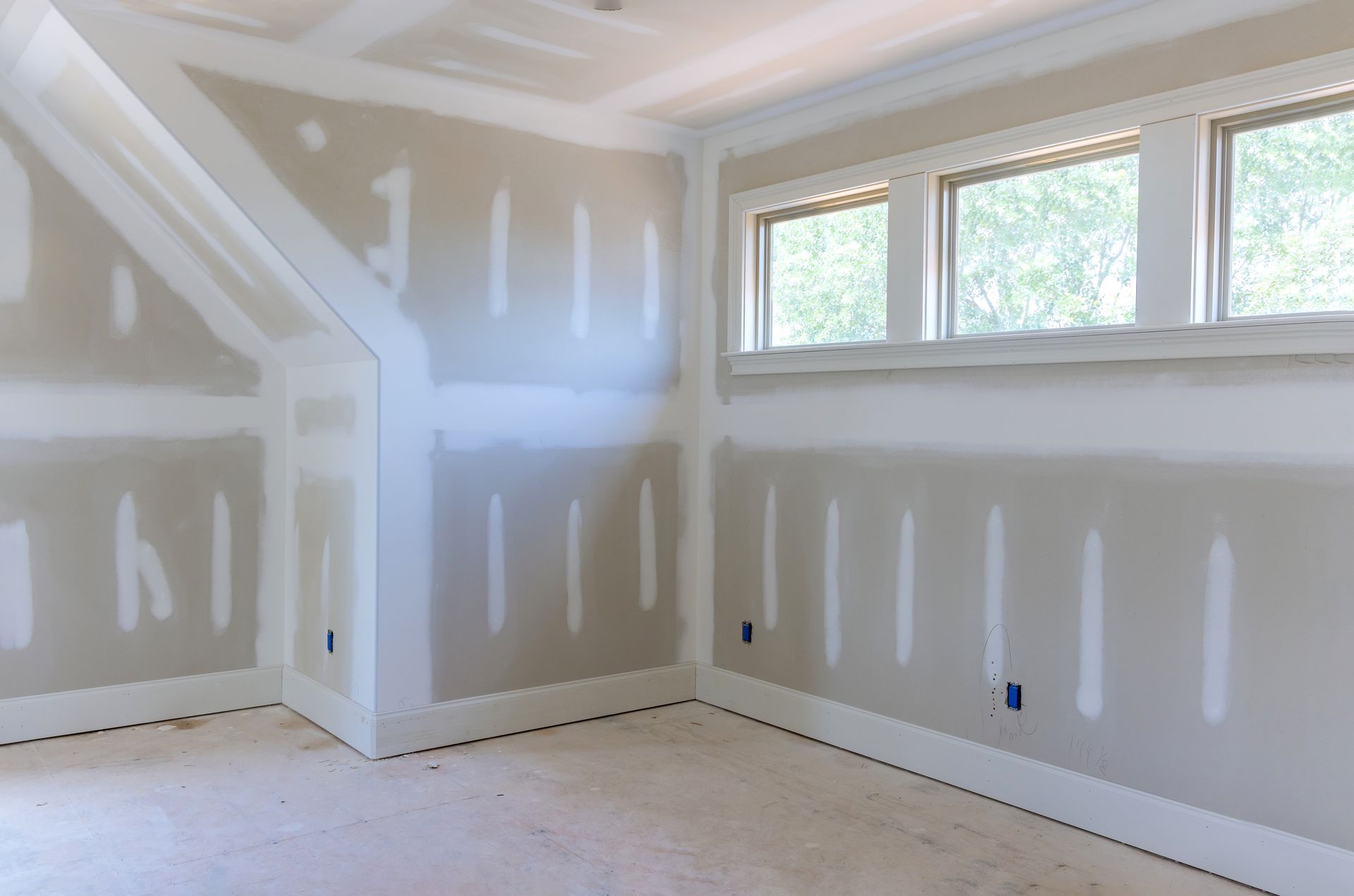
Walls Prepared for a Smooth, Consistent Finish
Drywall Repair and Finishing in Fall River for damaged, patched, or remodeled surfaces that show cracks, holes, or uneven seams before painting
Holes from removed fixtures, cracks along seams, patches installed during plumbing or electrical work, and surfaces disturbed during remodeling all show clearly once a room is painted—light catches variations in texture and flatness that weren't visible before. Infinity Coatings & Construction addresses these conditions through drywall repair and finishing for properties in Fall River where interior surfaces need to be brought to a consistent, paintable state. The work is a necessary step in kitchens, bathrooms, basements, and any room where walls have been opened, patched, or left unfinished after other trades completed their work.
Repair approach depends on what the surface actually shows. Small punctures and nail pops are handled differently than long cracks at drywall joints, which behave differently again from larger holes where backing material needs to be installed before compound can be applied. Feathering compound out far enough from the repair point—rather than building a small, abrupt patch—is what allows the repaired area to blend into the surrounding wall surface without creating a visible raised or textured spot after paint goes on. Rushing that step, or applying paint before compound has fully cured, produces the shadowing and telegraphing that makes patches obvious even under a finished coat.
Arrange an estimate to review drywall conditions in the rooms you're planning to paint or remodel before work on adjacent surfaces begins.
Why Drywall Work Is Done Correctly
Finishing drywall involves applying joint compound in multiple thin layers rather than one heavy coat, sanding each layer after it cures, and repeating until the surface is flat and the seam or repair blends smoothly into the plane of the surrounding wall. The number of coats is driven by the depth of the repair and the texture of the existing surface—matching an existing texture requires understanding what produced it originally, whether that was a spray texture, a hand-applied finish, or a smooth skim coat that was standard in different construction periods.
Once repairs are completed and the surface has been primed, the walls show none of the interruptions that were visible before—no ridgeline around a patch, no crack shadow along a seam, and no difference in sheen between repaired areas and original drywall. That uniformity is what makes paint look intentional rather than applied over a problem. Infinity Coatings & Construction coordinates drywall repair as part of broader interior projects so that surface preparation and painting are sequenced without gaps that leave walls sitting unprimed between trades.
Drywall repair and finishing addresses surface conditions but doesn't cover structural wall issues—settlement cracks that return repeatedly, or walls with persistent moisture problems, indicate conditions that need to be evaluated and resolved before surface finishing will hold long-term. Identifying those situations during the estimate process prevents finishing work from being applied to surfaces that will require reopening. Basement spaces in particular benefit from this assessment, since moisture intrusion and settlement are more common below grade than on upper floors..
Questions Before Starting Your Project
These questions cover what property owners in Fall River most often want to clarify before drywall repair begins, especially when the work is part of a larger interior renovation or painting project.
How many coats of compound are needed for a repair to blend correctly?
Most repairs require at least two to three coats, with sanding between each—the goal is a gradual, feathered transition from the repaired area into the surrounding wall, which takes multiple thin applications rather than a single thick one.
What causes repaired drywall to show through paint after the work is done?
Shadowing after painting typically results from inadequate feathering of compound, insufficient primer on the repaired area, or paint applied before the compound had fully cured—each creates a surface with different sheen or texture than the surrounding wall.
Why do cracks along drywall seams come back after patching?
Seam cracks often return when the underlying tape has separated from the drywall face—filling over a separated tape joint without removing and replacing it leaves the same failure point in place beneath the new compound.
How does drywall repair fit with bathroom and kitchen remodeling projects in Fall River?
Tile removal, plumbing updates, and cabinet modifications often leave sections of drywall that need patching before finishing surfaces are applied—coordinating repair with the broader project timeline prevents delays in painting or tile installation.
What's the difference between drywall repair and a full skim coat?
Targeted repairs address specific damaged areas; a skim coat applies a thin layer of compound across an entire wall surface to create uniform texture and flatness—skim coating is typically used when a wall has widespread texture inconsistency or has been repaired in many places.
Infinity Coatings & Construction reviews wall conditions as part of the estimate process to confirm what repair and finishing work is needed before painting begins. Request an estimate for your interior drywall project to get a clear scope of what bringing those surfaces to a finished state will involve.