
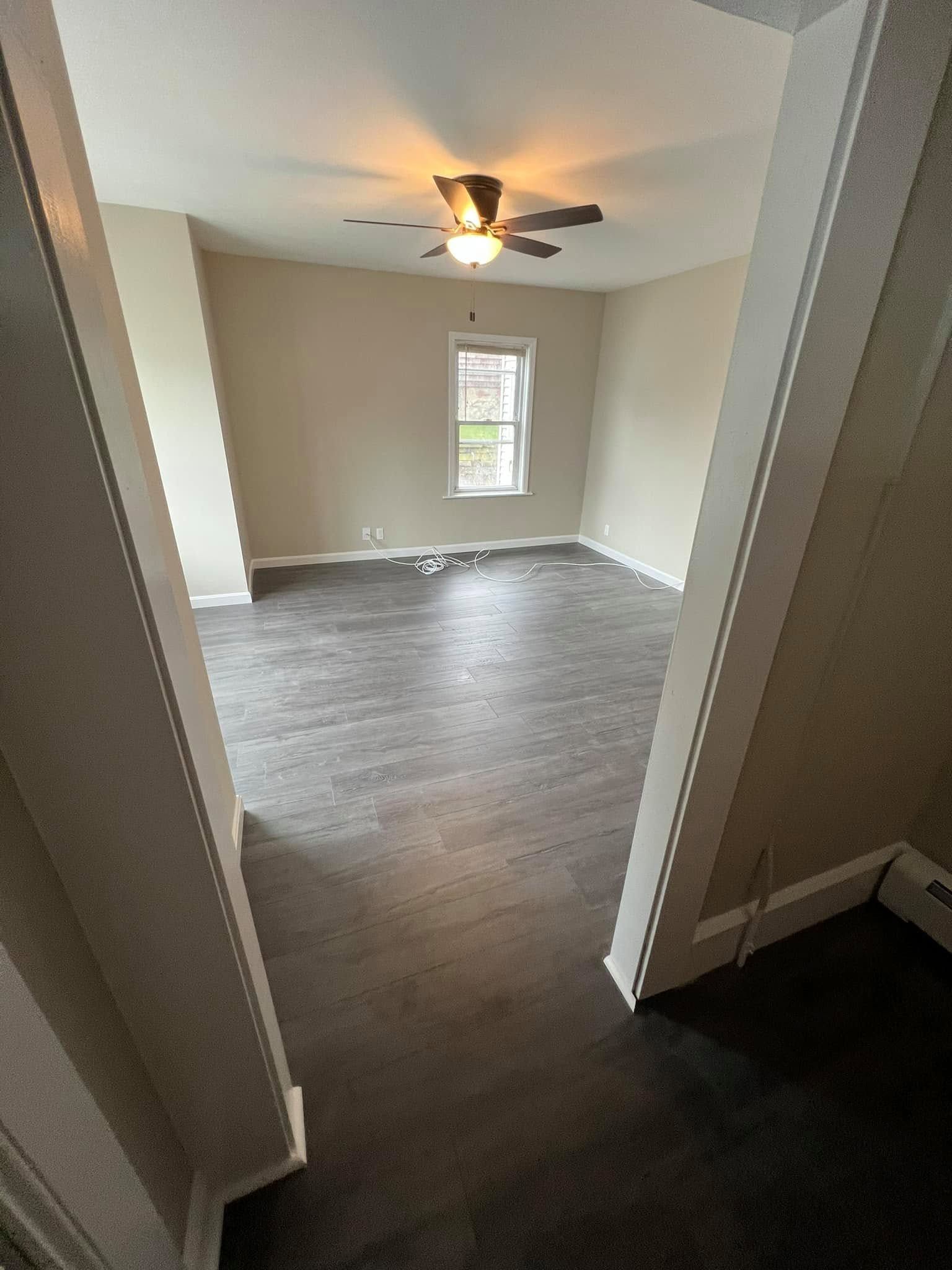
Painted Rooms That Reflect Careful Preparation
Interior Painting in Fall River for rooms with peeling surfaces, uneven coverage, or finish work that no longer holds up to regular cleaning
Surface preparation determines whether interior paint adheres cleanly and lasts, or begins peeling, scuffing, and showing lap marks within a season. Infinity Coatings & Construction provides interior painting in Fall River with a preparation-first approach—addressing drywall imperfections, sanding existing surfaces to promote adhesion, taping adjacent trim and architectural details, and applying paint in methodical passes that produce consistent coverage rather than rushed single-coat applications. Homeowners who have repainted a room and seen the result fail within a year are almost always looking at a preparation problem rather than a paint quality problem.
Fall River's older housing stock includes a significant proportion of homes with plaster walls and original trim profiles that require careful attention when painting. Plaster surfaces that have developed hairline cracks need to be filled and sanded before paint is applied, because paint alone bridges a crack temporarily but does not bond it—the crack telegraphs through the new finish coat within a few months of temperature cycling. Trim work in older homes often has multiple layers of oil-based paint that must be sanded or primed correctly before water-based top coats will adhere without peeling at edges. These are the preparation details that distinguish a finish that holds from one that looks fresh for a month before showing the underlying conditions that weren't addressed.
Request an interior painting estimate based on the specific rooms and surfaces you want to refresh..
What You Notice Once the Painting Is Finished
Interior painting involves more decision points than most homeowners anticipate before the project starts. Paint sheen selection affects how a surface performs in its specific location: flat finishes absorb light and conceal wall imperfections but don't clean easily, while eggshell and satin finishes hold up to wiping in kitchens, bathrooms, and hallways without the high-gloss reflection that shows every surface irregularity. Choosing the wrong sheen for a room's use pattern means the surface either becomes difficult to maintain or draws attention to substrate imperfections the homeowner was trying to minimize.
After the work is completed, the visible markers of quality preparation and application are specific: paint lines at ceiling-to-wall transitions are sharp rather than wavy, trim edges are clean without overspray on adjacent surfaces, and coverage is consistent across the full wall plane without visible roller texture variation between passes. Color and finish changes that might seem subtle on a sample card—moving from a warm off-white to a cooler greige, or from flat to eggshell—are immediately apparent once the full room is painted and lit naturally, which is why viewing samples in the actual room under actual light conditions matters before committing.
Interior painting scope can range from a single room refresh to a full-home repaint that covers walls, ceilings, trim, and doors throughout. Projects that include drywall touch-ups as part of the painting scope allow surface repairs to be primed and blended into the surrounding finish rather than remaining visible as patched areas with a different texture from the surrounding wall—a detail Infinity Coatings & Construction addresses as part of the standard preparation process.
What Homeowners Typically Ask First
Interior painting questions often center on preparation, sheen choices, and how to evaluate whether a quote reflects thorough work or a surface-only application—these are the most common ones from homeowners in Fall River.
How much preparation is actually required before painting a room?
Walls are sanded or scuff-abraded to promote adhesion, holes and cracks are filled and feathered flat, trim is taped, and surfaces are primed where bare drywall, repairs, or stain-prone areas are present before any finish coat is applied.
What paint sheen should be used in a bathroom or kitchen?
Satin or semi-gloss finishes are standard in high-moisture and high-contact areas because they resist humidity and can be wiped clean without the finish degrading, unlike flat paint which absorbs moisture and marks easily.
Why do some paint jobs show lap marks and roller texture while others look smooth?
Lap marks develop when a wet paint edge dries before the next pass overlaps it—typically a sign of working too slowly, applying too thin a coat, or using a roller with the wrong nap depth for the wall texture.
When is priming necessary versus painting directly over an existing finish?
Bare drywall, repaired areas, surfaces transitioning from a dark to a light color, and previously oil-painted surfaces being switched to water-based paint all require primer to ensure adhesion and prevent bleed-through in the top coat.
How does Fall River's seasonal humidity affect interior painting?
High indoor humidity during summer months can extend paint dry times and affect how well coats bond between applications, making proper ventilation during and after painting a relevant factor in how the finish cures and how soon the room can return to normal use.
Infinity Coatings & Construction can walk through your rooms, identify any surface conditions that need attention before painting begins, and provide a detailed estimate—connect with the team to set up a walk-through at your property.